The word “tiff” is short, simple, and often confusing because it has more than one meaning depending on context. Most people search for tiff meaning when they hear it in conversation, see it in chats, or come across it online.
In everyday English, “tiff” usually refers to a small argument or minor disagreement between people. However, it can also appear in technical or niche contexts, which adds to the confusion.
In texting culture, especially on platforms like WhatsApp, Instagram, TikTok, and Snapchat, people use “tiff” to describe small fights or emotional misunderstandings.
Because digital communication moves fast, short words like this are widely used.
This article breaks down the meaning of “tiff,” its origin, usage in modern chats, differences from similar words, and how it is used across different fields.
Everything is explained in simple English so you can understand it quickly and clearly.
Meaning & Definition of TIFF
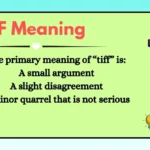
The primary meaning of “tiff” is:
- A small argument
- A slight disagreement
- A minor quarrel that is not serious
It is not a strong fight. It is something light, emotional, and usually temporary.
Example:
- “They had a tiff over dinner plans.”
This shows a small misunderstanding, not a major conflict.
Secondary meanings:
Although rare, “tiff” can also appear in other contexts:
- Informal emotional conflict between friends or couples
- Light irritation or annoyance
- In technical contexts, TIFF can refer to a file format (Tagged Image File Format), but this is unrelated to emotional meaning
In everyday language, however, “tiff” almost always means a small argument.
Background & Origin of the Word TIFF
The word “tiff” dates back to the 16th century in English usage. Its exact origin is unclear, but linguists believe it may have come from an old slang expression meaning “a slight fit of anger or drinking sip.”
Over time, the meaning evolved into what we use today:
- Old English usage → small outburst or minor irritation
- Modern English usage → light disagreement or petty argument
The word became popular in literature and casual speech because it sounds soft and non-threatening. Unlike “fight” or “argument,” “tiff” feels mild and less emotional.
This is why it is still widely used in modern digital communication.
Usage in Different Contexts
The meaning of “tiff” changes slightly depending on where it is used.
1. Everyday Conversation
People use it to describe small disagreements:
- “We had a tiff this morning, but it’s fine now.”
2. Social Media
On platforms like Instagram or TikTok, people use it in captions or comments:
- “Couple tiff 😅”
- “Friendship tiff but still besties”
3. Messaging Apps
On WhatsApp and Snapchat, it is often used casually:
- “Sorry about the tiff earlier.”
4. Romantic Relationships
It is very common in dating:
- “They had a cute little tiff but made up quickly.”
The tone is always light, not serious.
Meanings Across Platforms
On WhatsApp, “tiff” usually refers to small misunderstandings between friends, family, or partners. It is often followed by emojis like 😅 or 😔.
On Instagram, users use “tiff” in captions to describe relationship drama or funny arguments.
TikTok
On TikTok, creators use it in storytelling videos:
- “POV: You and your best friend have a tiff over nothing.”
Snapchat
On Snapchat, it appears in quick chats or streak conversations, usually describing short-lived arguments.
Across all platforms, the meaning remains the same: a small, harmless disagreement.
Other Fields (Technical Meaning of TIFF)
Apart from emotional slang, TIFF also has a technical meaning:
TIFF File Format
- Stands for Tagged Image File Format
- Used in photography and publishing
- Stores high-quality images without much compression
This is commonly used in:
- Graphic design
- Printing industry
- Professional photography
So, depending on context:
- “tiff” = small argument
- “TIFF” = image file format
Capitalization often helps distinguish the meaning.
Common Misconceptions & Mistakes
Many people misunderstand the word “tiff.” Here are common mistakes:
1. Thinking it means a serious fight
Wrong. A tiff is always minor.
2. Confusing it with “teeth” or similar-sounding words
They are unrelated.
3. Assuming it is only slang
It is also a technical term (file format).
4. Believing it is negative
A tiff is usually harmless and temporary.
Similar Terms & Alternatives
| Word | Meaning | Intensity |
|---|---|---|
| Tiff | Small argument | Low |
| Disagreement | Difference of opinion | Medium |
| Argument | Strong discussion | Medium-High |
| Fight | Physical or verbal conflict | High |
| Spat | Slight quarrel (similar to tiff) | Low |
“Tiff” and “spat” are the closest in meaning.
How to Respond to a TIFF
If someone says they had a tiff, here are natural responses:
Example 1
- “It was just a small tiff 😅 don’t worry about it.”
Example 2
- “Every couple has tiffs, it’s normal 👍”
Example 3
- “Glad it was just a tiff and nothing serious!”
Example 4
- “Let it go, it’s just a tiny misunderstanding 😊”
These responses help keep the mood light and friendly.
Differences From Similar Words
- Tiff vs Fight → tiff is soft, fight is intense
- Tiff vs Argument → argument is more structured and serious
- Tiff vs Spat → almost identical, but “spat” is slightly more formal
- Tiff vs Quarrel → quarrel is more emotional and longer
So, “tiff” is the mildest version of disagreement.
Relevance in Online Conversations & Dating Apps
On dating platforms and social media, “tiff” is often used to soften conflict. Instead of saying “we fought,” people say:
- “We had a tiff”
This makes the situation sound less serious and more relatable.
In modern communication, soft language helps avoid drama and keeps conversations friendly. That is why “tiff” is popular in online dating culture and casual texting.
Popularity & Trends Over Time
The usage of “tiff” has stayed relatively stable over time. It is not a trending slang word like newer internet expressions, but it remains consistent in:
- Literature
- Everyday speech
- Online chatting
Search interest in “tiff meaning” often spikes when:
- People encounter it in chats
- It appears in captions or videos
- Learners of English see it in reading material
Overall, it is a steady, evergreen term rather than a viral trend.
FAQs
1. What does tiff mean in texting?
It means a small or minor argument between people.
2. Is a tiff a serious fight?
No, it is light and usually short-lived.
3. What is TIFF in full form?
It can also mean Tagged Image File Format in technical usage.
4. Is tiff a slang word?
Yes, in emotional context it is informal slang.
5. Can couples have a tiff?
Yes, it is very common in relationships.
Quick Bullet Summary
- Tiff = small argument
- Not serious or long-lasting
- Common in chats and social media
- Also a file format (TIFF) in tech
- Used to describe minor emotional disagreements
Conclusion
The meaning of “tiff” is simple yet widely used in modern English. It mainly refers to a small, harmless disagreement between people, often seen in friendships, family interactions, or romantic relationships.
On social media and messaging apps, it is used to describe minor emotional moments without sounding harsh or dramatic.
At the same time, “TIFF” can also refer to a professional image file format, showing how context changes meaning completely.
Whether you see it in a chat or online post, the word usually signals something light and temporary.
Understanding “tiff” helps you read conversations more naturally and respond appropriately in everyday digital communication.

Henry Collins brings clever jokes and witty puns to make every visit fun.
He believes laughter is the best way to turn everyday moments into smiles.